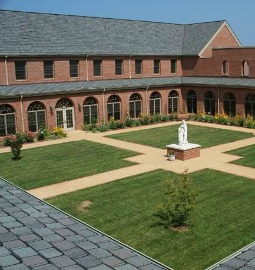
 Dixie Catholics credit the strong Southern sense of community, and dialogue with faithful Protestants, with helping to power the Church’s growth there.
LINDEN, Va. — In the waves of turbulence that rippled throughout the Catholic Church in the 1970s, the nuns of St. Dominic’s Monastery found themselves forced to leave their longtime home in Wisconsin in search of a new one.
The nuns moved to a temporary residence in Washington, D.C., while looking for a permanent setting conducive to the cloistered, contemplative life they sought to lead. It would be more than two decades before they found one. When they did, it was in what may seem a most unlikely place: the rural northeast of Virginia, considered one of the Protestant Bible Belt states of the South.
The story of St. Dominic’s Monastery’s southern move may be the story of U.S. Catholicism. New data shows that some of the fastest-growing dioceses in the country are deep in the U.S. South.
The third-fastest-developing diocese is Atlanta, which saw the number of registered parishioners explode from nearly 322,000 in 2002 to 1 million in 2012 — an increase of more than twofold, according to the Center for Applied Research in the Apostolate at Georgetown University. Atlanta also has the largest Eucharistic Congress in the country, with an annual attendance of about 30,000, according to an archdiocesan official. Source
 Catholic high school students chanted, “You killed Jesus” at a basketball game against a predominantly Jewish high school in a Boston suburb on Friday night.
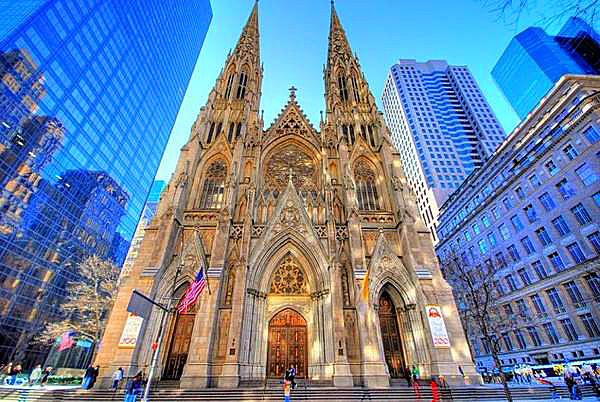 A federal judge has rejected an ACLU demand that he order Catholic hospitals to perform abortions in violation of church teaching.
 It’s something climate skeptics have long suspected: Government involvement in science has skewed data to reflect the government’s agenda.
 Tennessee Gov. Bill Haslam vetoed a bill that would have made the Bible the official book of the state, saying the measure actually downplayed the significance of the Good Book and turned it into a historical, rather than spiritual, text.
 of regional currencies against the U.S. dollar cost the General Conference, the administrative body that oversees the Seventh-day Adventist Church, a total of $19.4 million.
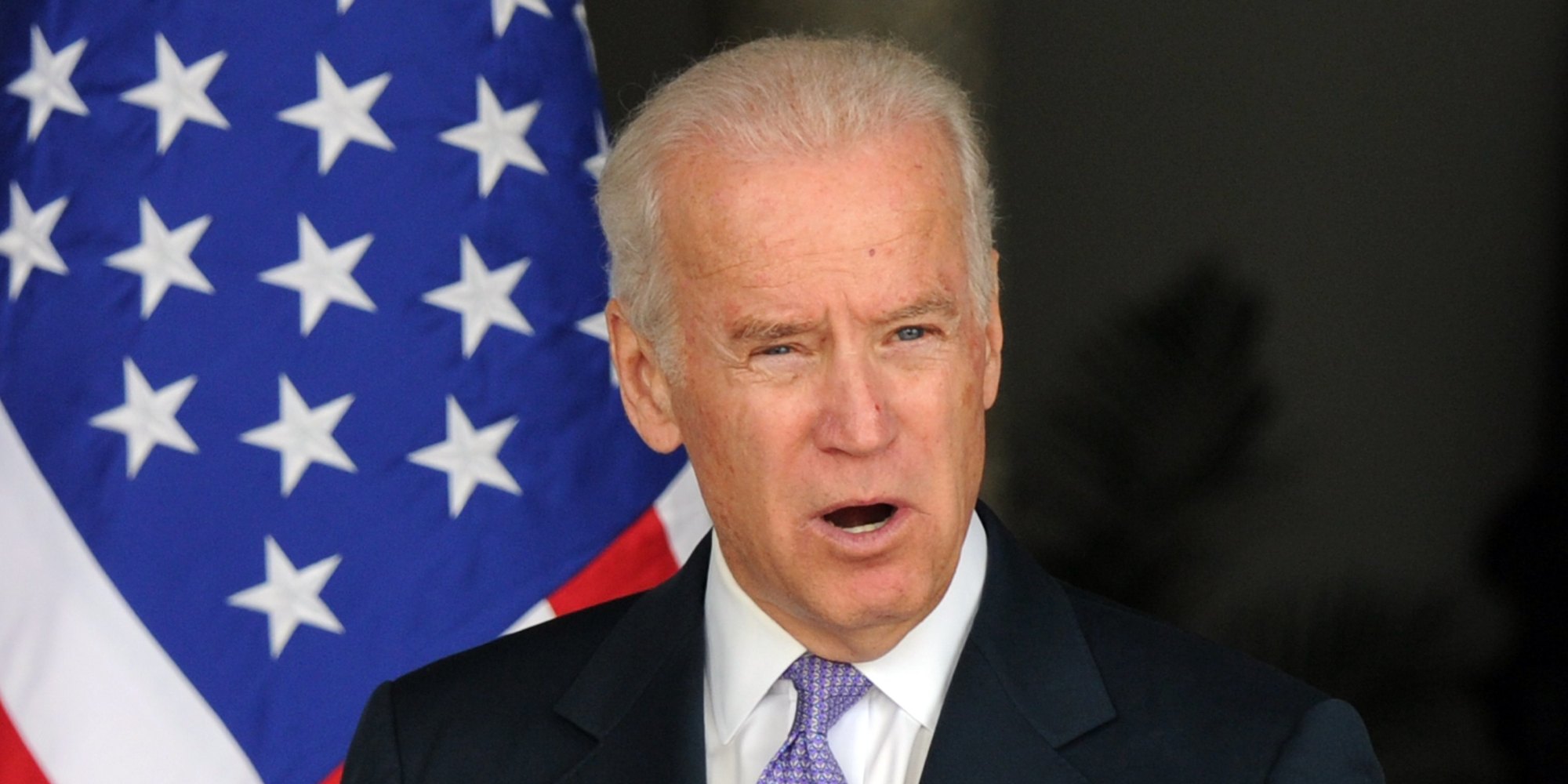 Vice President Joe Biden, who has traveled to some America’s leading medical centers in recent weeks as part of what he has called his moonshot to cure cancer, will soon take his quest to the Vatican.
 Norway is a progressive country. It has already adopted policies and legislation to support minority rights, women’s rights, and LGBT rights. It was the first country to pass an anti-discrimination law to protect the rights for same-sex couples.
 The European Parliament has backed a re-authorization of a pesticide believed to be carcinogenic for another 7 years, despite a widespread protest campaign calling for a full ban instead of a downsized “compromise” deal.
 Last week,